
Itawamba County Civil Docket Searches
Begin with subject-matter jurisdiction, because the court that keeps the case controls the search. Circuit civil filings run through the First Circuit MEC route. The Itawamba County Circuit Clerk sits behind that route. Chancery filings run through First Chancery MEC, the public Chancery calendar, and the Chancery Clerk. Justice Court takes a separate route. Itawamba County posts no countywide public Justice Court civil search. A city court site is not the usual home for a county civil case either.
Remote MEC access runs through Public Access to MEC, or PAMEC. It requires registration and payment. Keep the court calendar apart from the docket sheet. One shows settings and the other shows filings. Pull the cause number or case number from the court papers when you can. Then check the court and county listed on the result. The local published material offers no universal civil case-number format. So do not rebuild a number from a calendar example.
- Identify whether the matter is Circuit, Chancery, Justice Court, or a lower-court appeal.
- Use PAMEC for electronic Circuit or Chancery matters when remote access is appropriate.
- Check the public Chancery calendar for a hearing setting, not as a substitute for the whole file.
- Call the correct clerk for a paper, older, restricted, or unclear record.
- Use the county public-records request route when the appropriate custodian directs a written request.
Itawamba Civil Docket Routes
Three local paths cover most Itawamba County civil docket questions. The First Circuit describes Circuit Court as the venue for civil actions over $3,500. It shares jurisdiction with Justice Court from $200 through $3,500. Justice Court takes civil actions under $3,500. Chancery Court sorts by subject instead of dollars. It handles equity and domestic-relations work even when the amount in dispute matters little.
| Venue | Civil docket coverage | Search or clerk route |
|---|---|---|
| Circuit Court | Civil matters over $3,500, concurrent matters from $200 through $3,500, and specified lower-court appeals. | First Circuit MEC/PAMEC or Circuit Clerk. |
| Chancery Court | Divorce, estates, land disputes, adoption, conservatorships, guardianships, Youth Court, claims-docket work, and equity. | First Chancery MEC/PAMEC, public calendar, or Chancery Clerk. |
| Justice Court | Civil actions under $3,500. | Justice Court clerk; the county page lists no general online civil docket. |
The First Circuit jurisdiction description also covers appeals from County, Justice, Municipal, and administrative bodies. So an appeal marker on an Itawamba docket may point to a lower-court record as well as a Circuit civil file.
Civil Dockets: What They Show
A civil docket lists, in order, what has been filed, set, or decided. It promises neither public access to every document image nor that a setting is the final event. First Chancery's public setting format supplies a locally observed field inventory. MEC adds an electronic docket layer for participating courts. Read the court, the county, and the cause number together. The Chancery district spans several counties, and a match in one field alone can mislead.
| Cause or case number | Chancery public settings label the identifier “Cause #.” Circuit MEC uses the court's case-number format. Use the exact published identifier rather than assuming a format such as 2026-CV-00001. |
|---|---|
| Caption and parties | The case title and party roles, with attorney appearances when the court displays them. |
| Nature and setting | A motion, trial, hearing, conference, or other relief named in the order, plus the scheduled date and time. |
| Event register | Filing, notice, motion, agreed order, cancellation, continuance, judgment, or appeal entries. |
| Access markers | Chancery MEC flags can include Minor_Child, GAL, EX PARTE, SEALED, and Sealed_Case, which signal that an access question remains. |
A signed order and a filed order are not the same point in the record. First Circuit procedures say a signed order can go back to a party for filing with the clerk. So confirming filing may take the docket or the clerk, not the signature alone.
Itawamba Chancery Docket Access
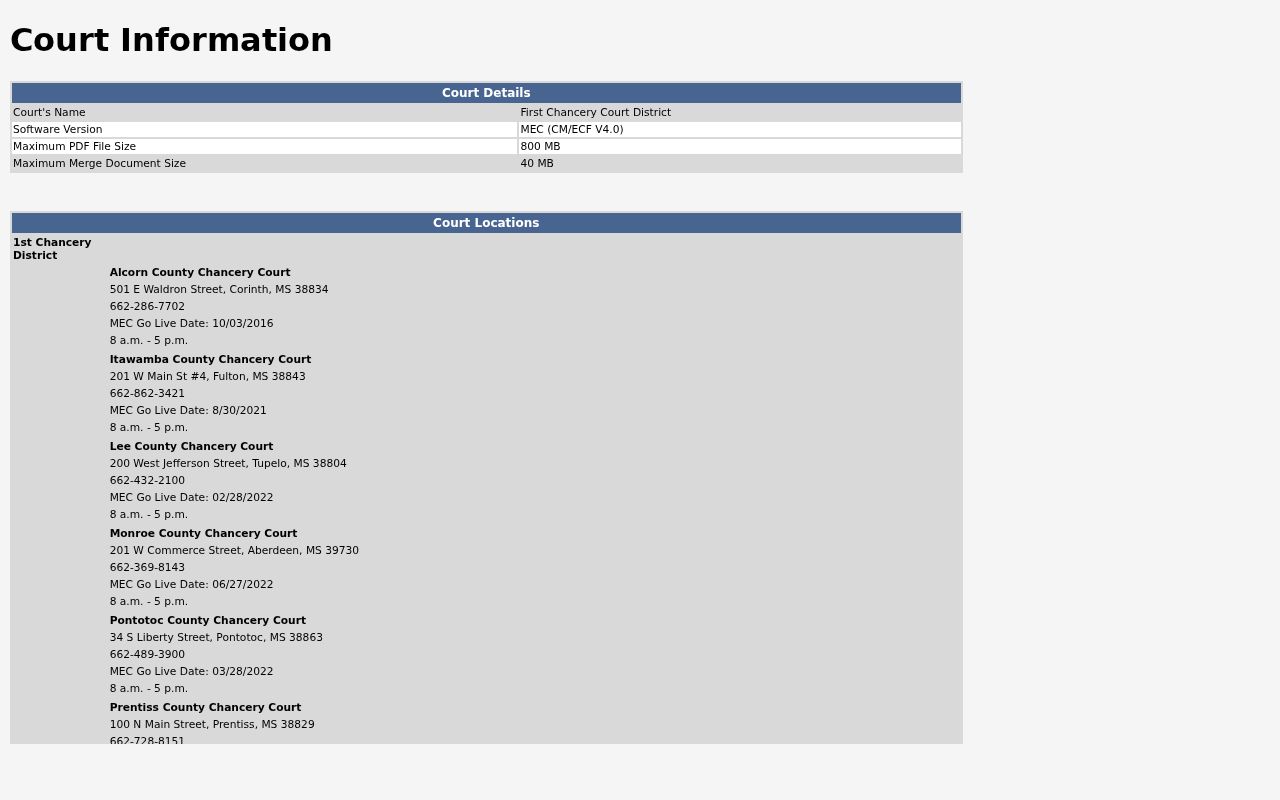
First Chancery MEC is the electronic route for Itawamba Chancery cases that MEC carries. Itawamba got a Chancery MEC go-live date of August 30, 2021, per the First Chancery Court Information record. Anything older may call for a trip to the Chancery Clerk's office. So may cases outside public online access. The First Chancery MEC landing screen shows the district's electronic court entry point. It also shows what a visitor will see there.
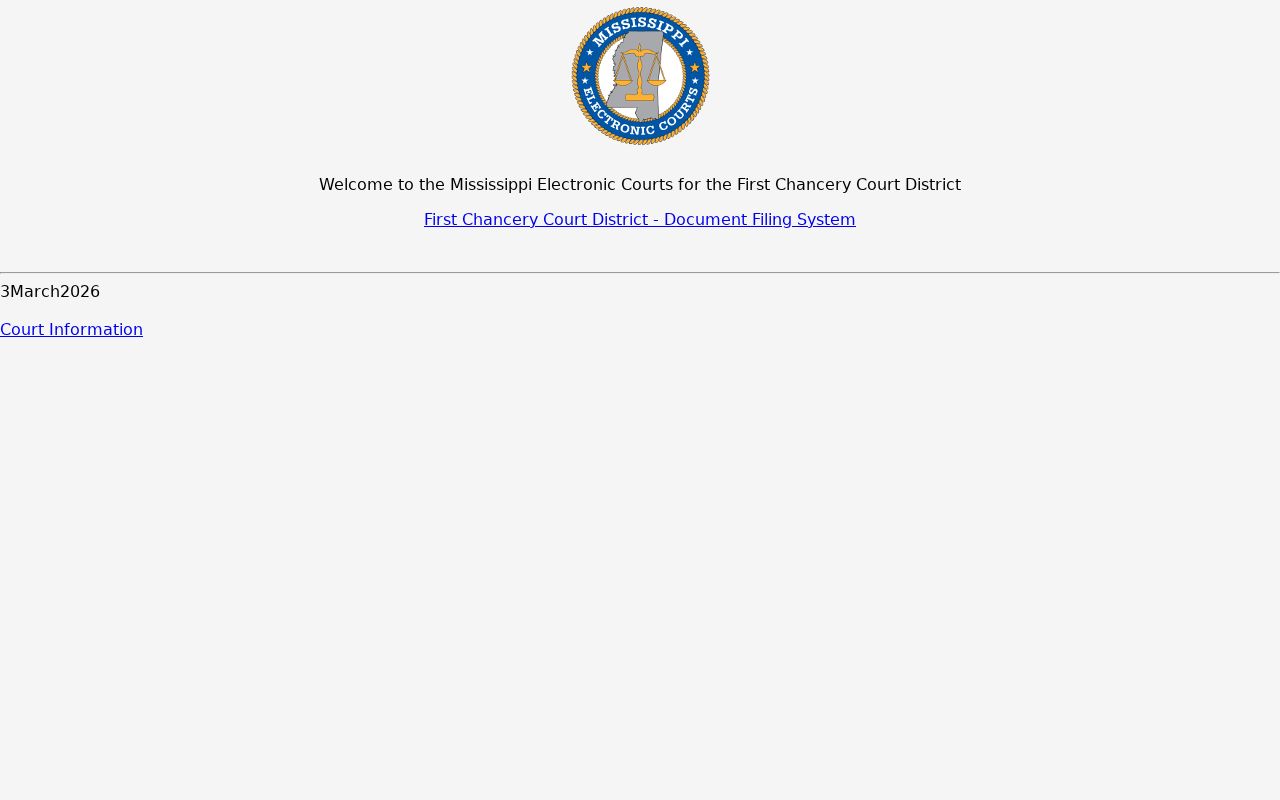
PAMEC lets non-attorneys read Itawamba County dockets from home. Only courts that take part in the electronic system show up there, and it costs money. The PAMEC non-attorney terms spell out a $0.20 charge for each result page. That fee applies even when a search turns up nothing. Registration also adds a $10 annual fee. Before you search, gather the exact cause number and the right court. Broad, repeated searches on PAMEC drain a prepaid account fast.
The Chancery MEC Court Information screen shows the Itawamba location. It also lists the MEC system details the court uses.
An electronic entry point does not open every case paper. A docket sheet or calendar reference can appear while the underlying document stays restricted. For a complete or official copy, contact the clerk who holds the file.
What Cases Fill the Civil Docket
Civil docket content shifts with the court. Circuit Court carries general civil law matters within its jurisdiction. Chancery Court holds the county's equity, family, probate, and related records. Justice Court handles the lower-dollar civil route. A civil appeal can also lift a matter from a lower court. It then lands in the Circuit record. Treat the category as a routing clue, not a promise about which documents are public.
- Circuit civil actions within the court's jurisdiction, including matters over $3,500.
- Justice Court civil actions under $3,500, with concurrent jurisdiction in the stated $200 through $3,500 range.
- Divorce and other domestic-relations filings in Chancery Court.
- Estates, wills, inventories, guardianships, and conservatorships kept through the Chancery Clerk.
- Land disputes and general equity matters in Chancery Court.
- Appeals from lower courts or administrative bodies that reach Circuit Court.
Adoption and Youth Court records raise heightened confidentiality questions. No case category overrides a restriction set by law or court order.
Itawamba Civil Docket Land Index
A land index and a civil docket are different things. The county's land-record portal only indexes recorded instruments. A deed or deed of trust hit there tells you nothing about a lawsuit. The portal itself warns that its online index is unofficial. The courthouse index is the official one. Finding an instrument does not mean a case is pending. Nor does it mean a judgment sits on an Itawamba County civil docket.
The Chancery Clerk can help you sort out which record you actually hold. A docket sheet tracks a court proceeding and its events. A recorded instrument is a separate layer of clerk-held records. That distinction matters for estates and land disputes alike. Ask before you pay for copies or request an inspection.
Hearings on the Civil Docket
A hearing date only makes sense once you know its label. The public First Chancery calendar is organized by month. A judge-letter key covers M, B, MM, and T. A date with no link is a first setting. A linked date can open a detailed scheduling view. It lists the judge, the date and time, the Cause #, the county, the caption, attorneys in order, the nature of the matter, and estimated time. It is a scheduling tool, though. It is not a full chronological docket or a disposition index.
Justice Court holds civil court days monthly. They fall on the first and third Tuesday of each month. The county page posts no current Justice Court civil case list. So call the clerk about a particular matter. Circuit Court runs a separate registered calendar with general information that may omit settings and can change. For any single hearing, the current order plus the responsible clerk remain the best confirmation.
Itawamba Civil Docket Setting Orders
Civil scheduling in Itawamba County runs through the First Circuit civil-matters instructions. They lay out the local route for setting trials and motions. A party who wants a trial date sends the court's request form to the Court Administrator. A written request also works. It can go by mail, fax, or email. Once everyone agrees on a date, the parties submit an Agreed Order Setting Trial through the Administrator. Motions follow a similar path. The parties check open dates, talk it over, and file the agreed setting order the court requires.
The First Circuit instructions spell out both the Agreed Order Setting process and the cancellation steps.
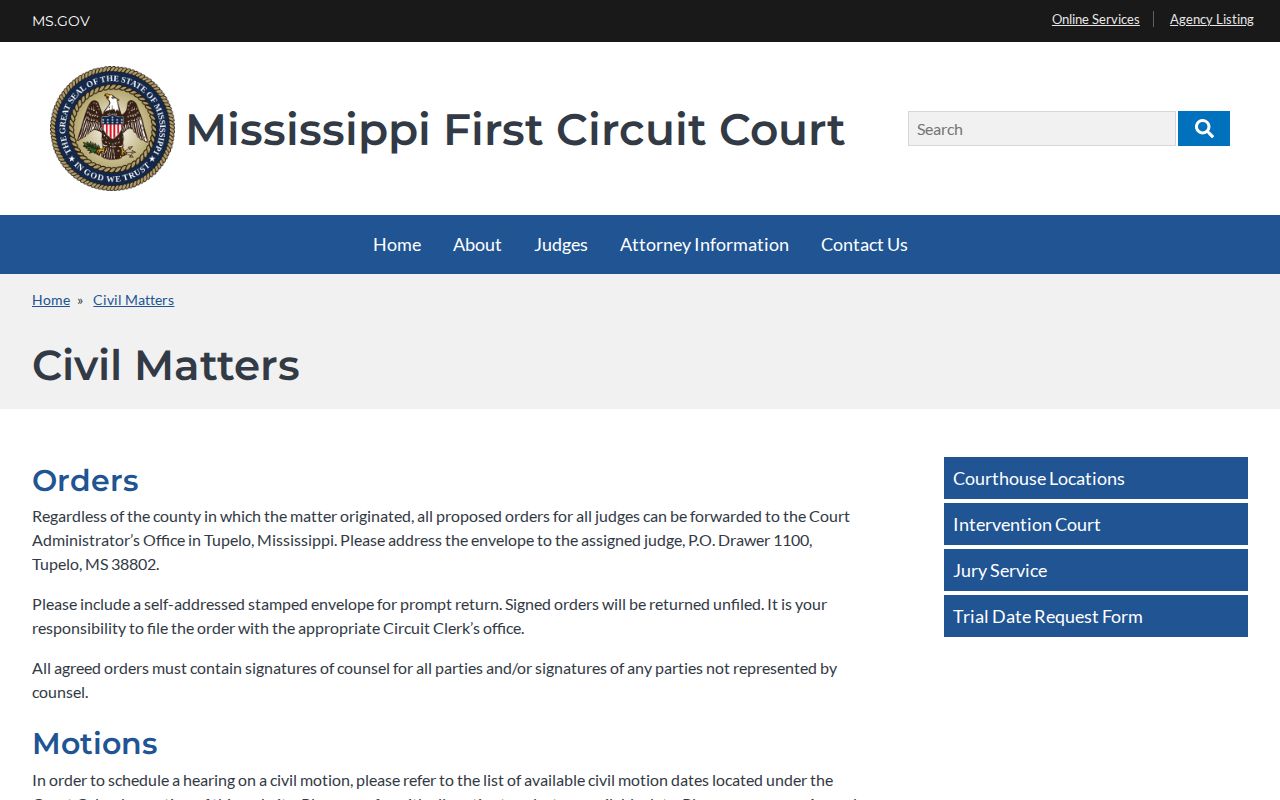
Cancelling takes a Notice of Cancellation filed with the Circuit Clerk. A copy goes to the Court Administrator. A settlement also requires notice. The case then comes off the trial calendar. A hearing may even sit outside the county where the case began. So the setting order and the assigned judge's instructions control where you show up.
Mississippi Rule of Civil Procedure 40 fills in the backdrop. Written direction tells the clerk a trial docket is set. The clerk must then give at least five days' notice to attorneys and unrepresented parties. Cases are generally set at least 20 days before trial unless an exception applies. None of this turns a general calendar into official notice for every case.
Who Can See Civil Dockets
Mississippi's public-record framework lets anyone inspect or copy non-exempt court records through the appropriate clerk. Court rules, confidentiality statutes, and court orders apply. They can still limit what gets released. A public Chancery calendar may show a setting while MEC documents stay restricted. Watch for MEC access flags. Examples include Minor_Child, GAL, EX PARTE, SEALED, and Sealed_Case. They mark access limits, not a public explanation of the underlying record.
Access context:
Miss. Code Ann. §§ 25-61-2 and 25-61-5 provide for inspection, copying, or reproduction of non-exempt public records through reasonable written procedures.
Miss. Code Ann. § 25-61-7 allows reasonable charges for search, review, duplication, and mailing work.
Miss. Code Ann. § 25-61-11 leaves confidentiality rules imposed by law or court order in place.
Knowing a cause number does not unlock protected files. Adoption records, many Youth Court matters, and similar material stay closed regardless. Ask the clerk or the court about the current access rule for that particular file.
Itawamba Civil Docket Requests
Chancery records in Itawamba County run through Michelle Clouse, the county's Chancery Clerk. Her office takes county public-records requests. Requests go by mail, hand delivery, email, or fax. The county states that responses go out within seven days under its procedures. For the details that govern a request, use the county's public-records request policy and fee schedule PDF. Confirm each form field and copy fee with the office before you order.
Itawamba Chancery Clerk
Michelle Clouse keeps Chancery minute books and the county's Chancery record route.
201 W. Main St. #4
Fulton, MS 38843
662-862-3931
Circuit civil papers start with the Circuit Clerk at 201 W. Main St. #1, Fulton. The clerk can explain local access and certification routing. Justice Court keeps its own files. Its address is 104 Joe Staub Road. Ask each office about current public-terminal access, copy rates, and whether the item you want is a docket printout, a filed document, or a certified copy.
One caution: the county's seven-day statement covers a response under its procedures. It does not promise immediate production of a large or restricted request.